
Drop Foot
People with drop foot tend to scuff their toes along the ground, so they may lift their foot higher than usual using their pelvis or trunk, or swing the leg from the hip when walking to prevent this. Such compensations can have a negative impact on walking speed, efficiency and balance. Walking with drop foot can therefore require full concentration and any small obstacles could mean a stumble, a very frustrating reminder of an illness in every step.
Frequently, the foot is not set down heel first, but with the toes or entire sole first as drop foot makes natural rollover of the foot and swing-through with the leg impossible.
Depending on the severity of the spastic paralysis (i.e. uncontrolled muscle tension) in the leg, those affected have a stiff, abnormal gait. The toes may clench up as a result of the paralysis.
In any case, spastic paralysis prevents a fluid gait. Medical aids can be used to reduce impairment.
Without a medical aid, the leg is often swung forward by means of what is called circumduction. This means that the leg is moved forward using a circular hip movement. Affected individuals who have used this method for a long time commonly complain of pain in the hip and pelvis.
Possible forms of drop foot:

1. Malposition of the foot, the affected person walks on the outer edge of the foot.
2. Drop foot with forefoot strike or toe walking. The heel no longer touches the ground on initial contact or at all when walking.
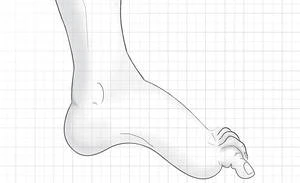
3. Malposition of the foot with clenched toes caused by spasticity in the affected foot.