Therapies for Living with
Drop Foot
Measures accompanying rehabilitation
Modern rehabilitation supports the optimal healing and recovery process. A customised rehabilitation plan made to fit your impairment ensures the fastest possible recovery. In most cases, several therapists work hand in hand to eliminate not only impaired mobility, but also cognitive deficits and communication problems as much as possible.
For example, if you have drop foot, a therapist trains you how to walk. The earlier training is started, the better the chance that lost functions will be recovered.
Physiotherapy and occupational therapy
Physiotherapy
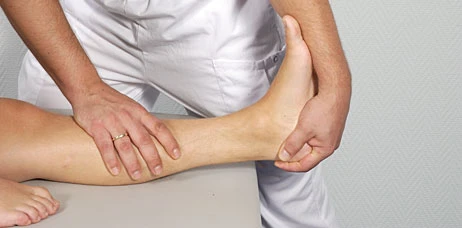
Patients frequently lose the former sense of their body. They often concentrate more on the "healthy" side and perform activities using only this side. This is what physiotherapists usually work on. They help patients improve balance and coordination and relearn the sequences of movements needed for sitting, standing and walking. The affected side is assisted and activated using exercises and various physiotherapy approaches and the healthy side is trained to assume functions.
Occupational therapy
Occupational therapy helps stroke patients handle everyday activities such as eating, getting dressed, shopping and personal hygiene as independently as possible. Affected individuals are often so impaired that it is difficult for them to pull a sweater over their head or unzip a zipper. The therapist trains the patient to perform the steps needed for these activities. Depending on the impairment, various medical aids can be useful.